Homemade Poultry Seasoning Recipe
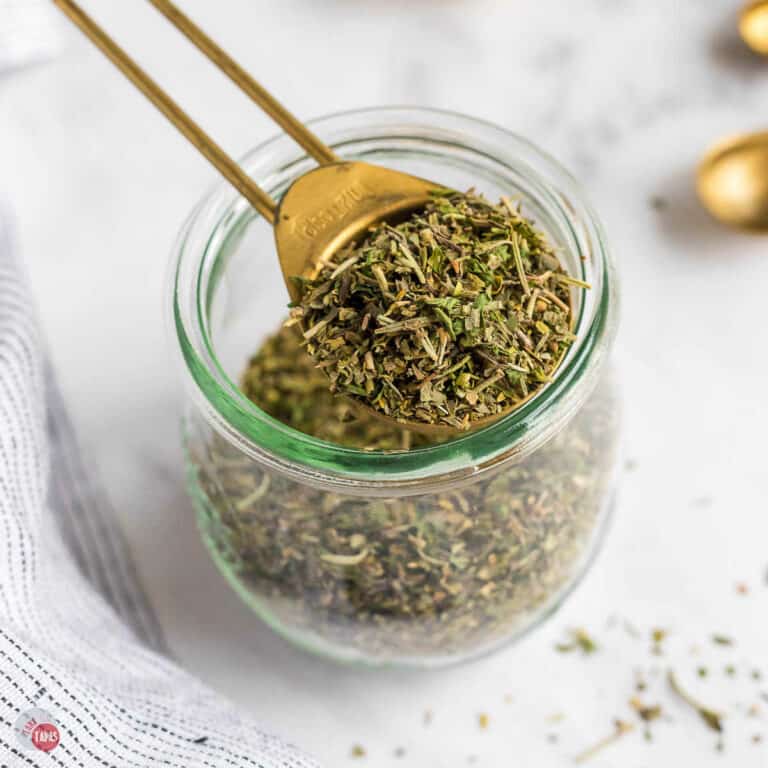
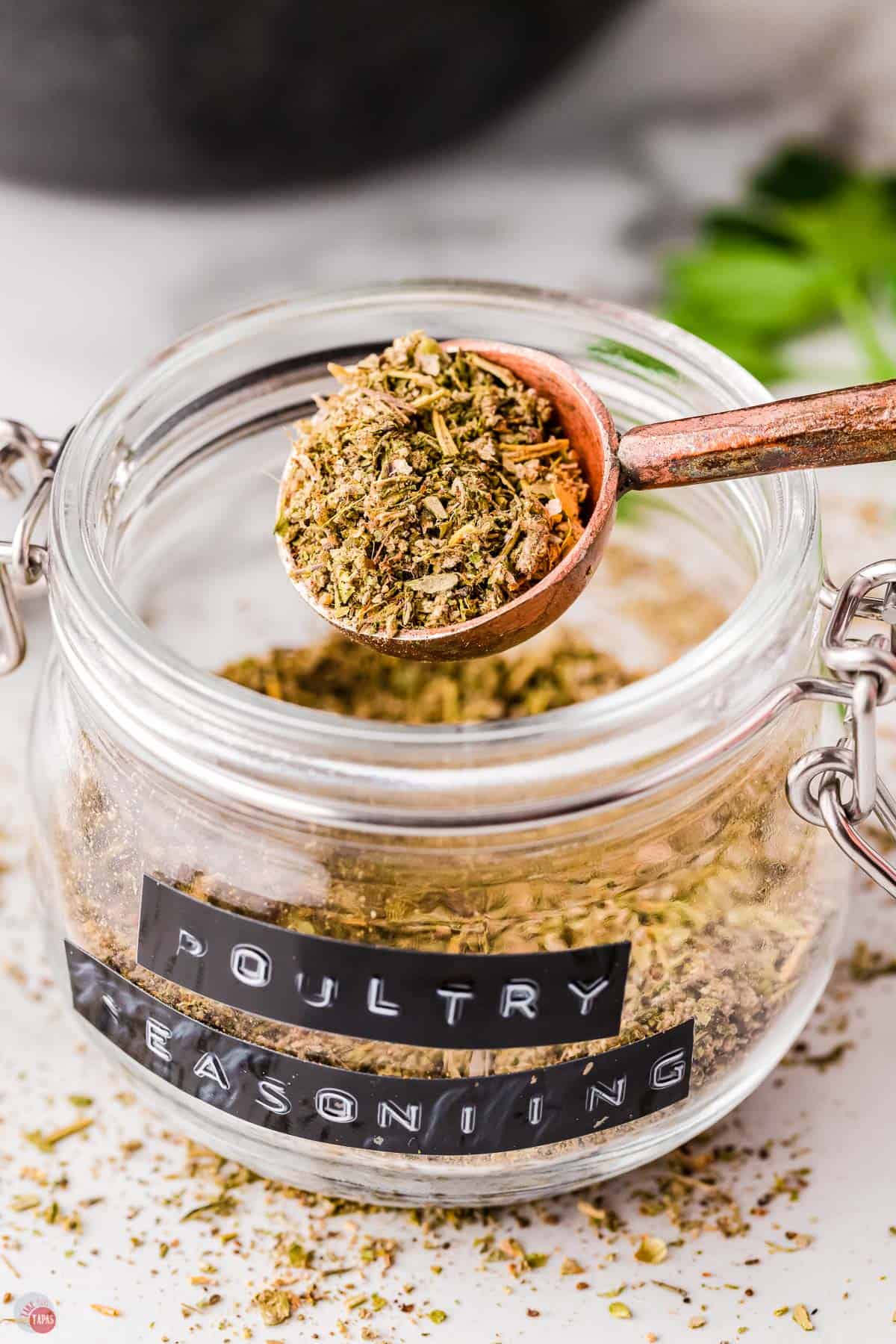
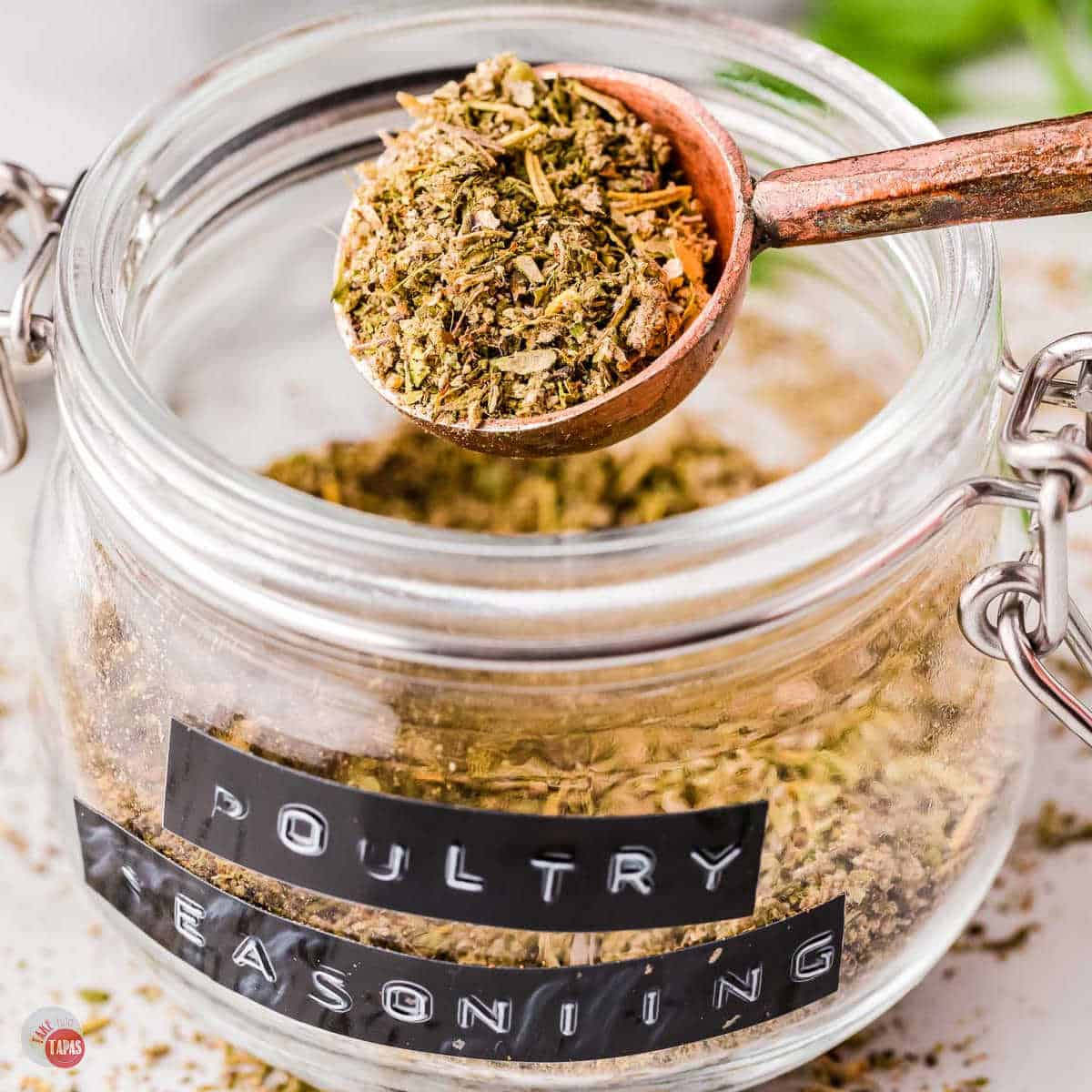
Homemade poultry seasoning is a herbaceous blend of rubbed sage, marjoram, thyme, rosemary, oregano, celery seed, nutmeg, and black pepper that comes together in five minutes. Unlike store-bought versions, this recipe uses rubbed sage and marjoram for a coarser texture that distributes better through stuffing and meat, plus oregano and celery seed that McCormick leaves out entirely. Use it on turkey, chicken, stuffing, soups, and casseroles all year long. Keeps for several months in an airtight jar.
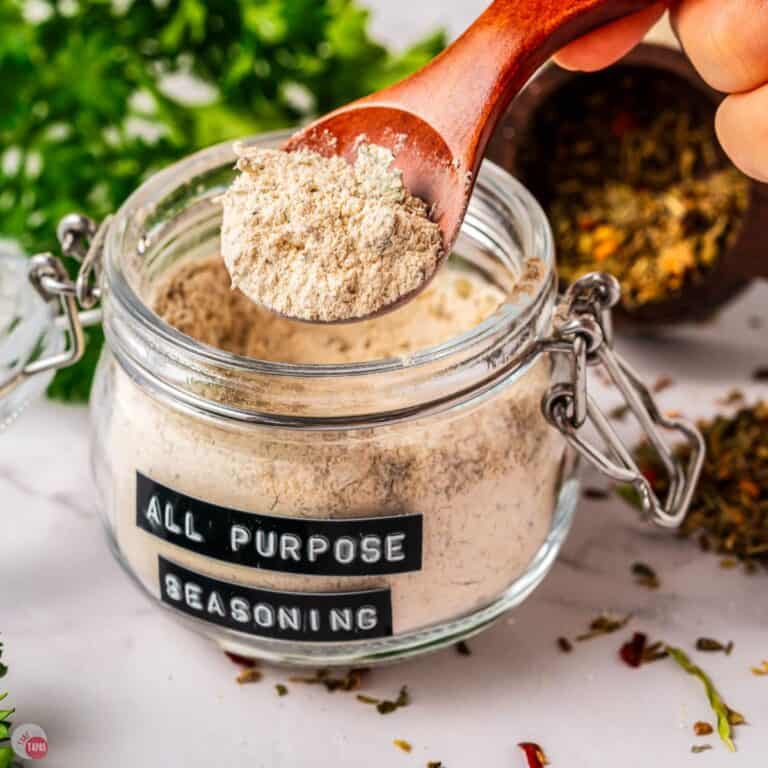
Store-bought poultry seasoning gets the job done but it is finely ground into a powder that disappears into dishes without adding much texture. It just falls flat.
This homemade version uses rubbed sage and rubbed marjoram – coarser, more textured herbs that hold up better in stuffing, distribute more evenly through meat, and deliver a more intense flavor than the ground up version in the McCormick jar.
It also includes oregano and celery seed, two ingredients the store-bought blend skips entirely, which gives it a depth that is completely different in flavor.
We fry our turkey most years and this is the blend we reach for every single time. It goes into fried cornbread stuffing balls, wild rice stuffing, and better than boxed stuffing all season long and works beautifully on Texas Roadhouse herb roasted chicken any time of year.
Five minutes and you will have a jar that lasts the entire holiday season – and once you make it you will not go back to the store-bought version!
What Is Poultry Seasoning?
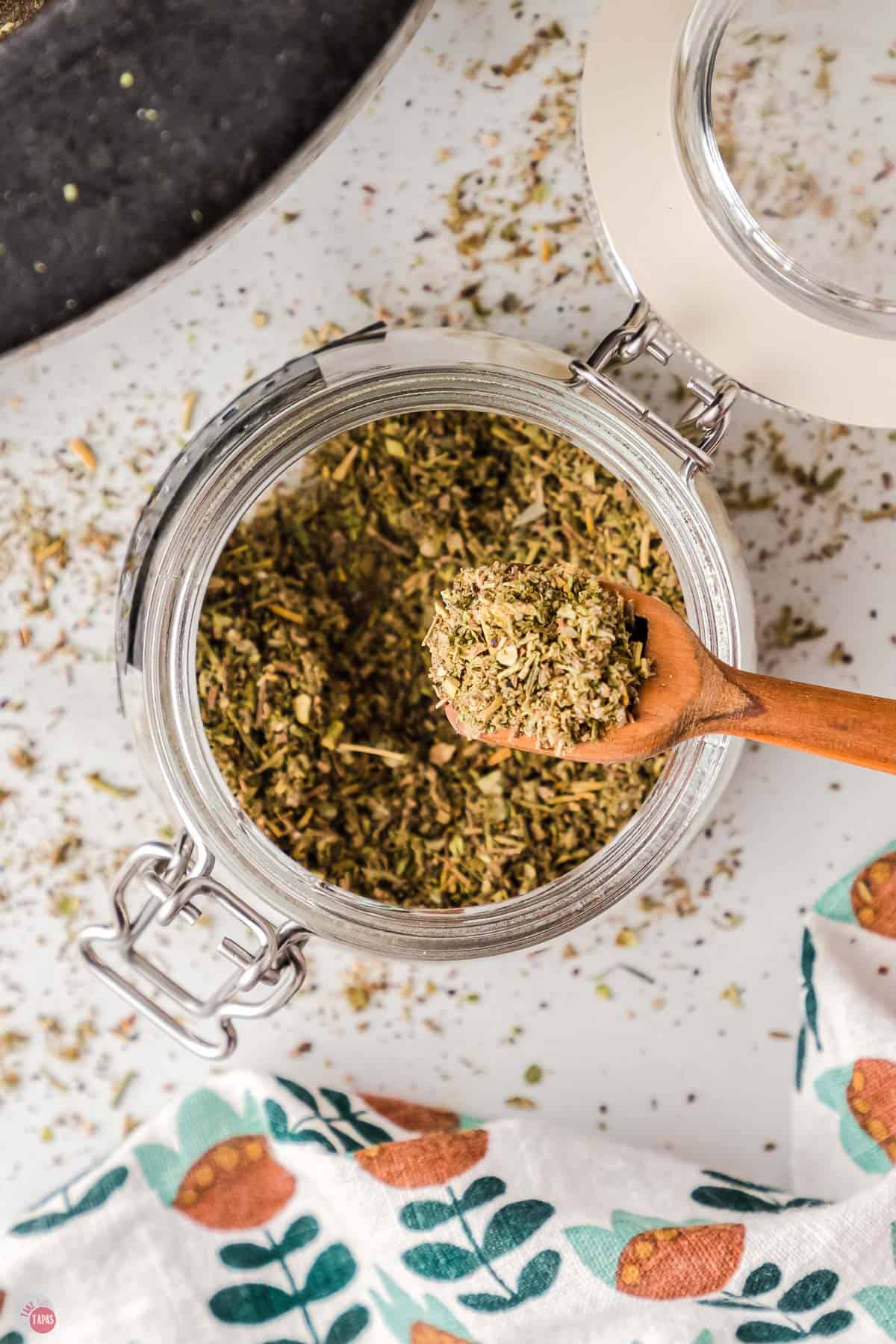
Poultry seasoning is a dry herb blend built around sage as the dominant flavor and rounded out by marjoram, thyme, rosemary, and other savory herbs.
Despite the name it is not a seasoning exclusively for poultry – it works on pork, in stuffing, soups, casseroles, pot pies, and anywhere you want a classic, savory herb flavor.
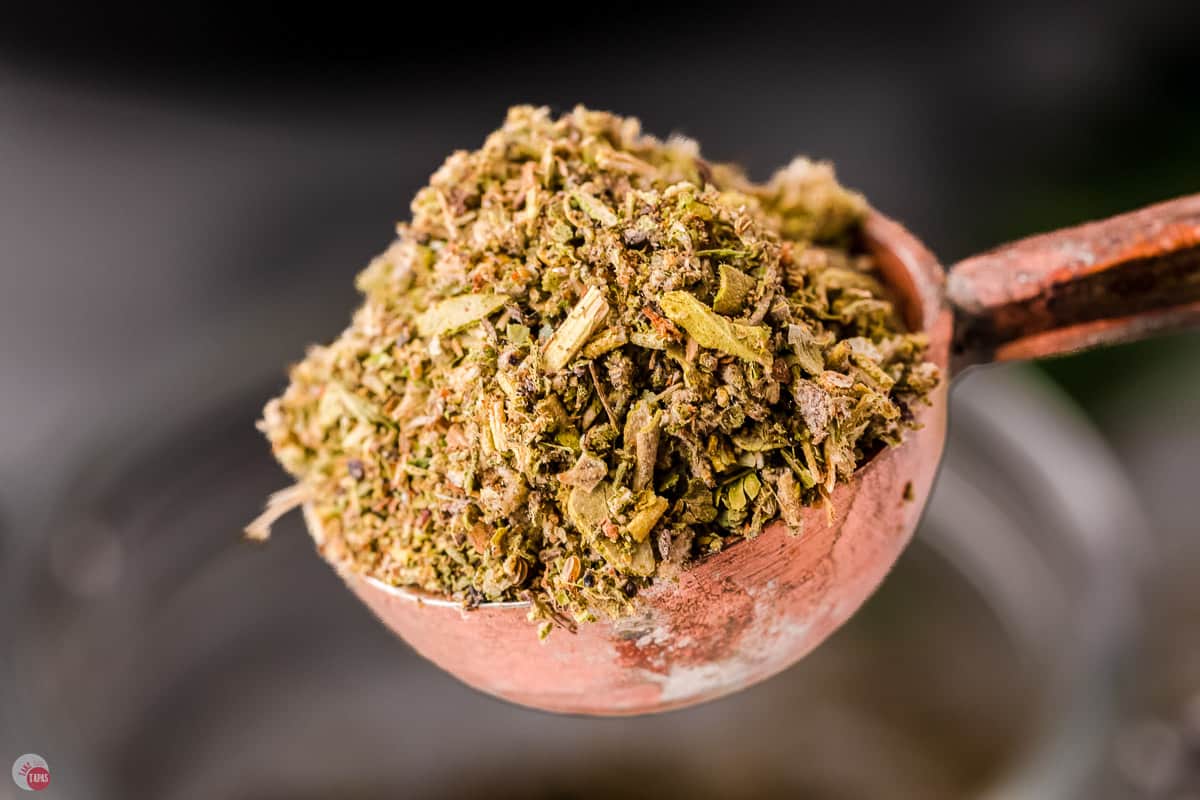
Most commercial versions like McCormick use finely ground herbs which creates a fine powder. Homemade versions can use rubbed herbs which have a coarser, more textured consistency and a more intense flavor because the oils in the leaves are better preserved.
Is This the Same as McCormick Poultry Seasoning?
Similar but not identical – and the differences matter!
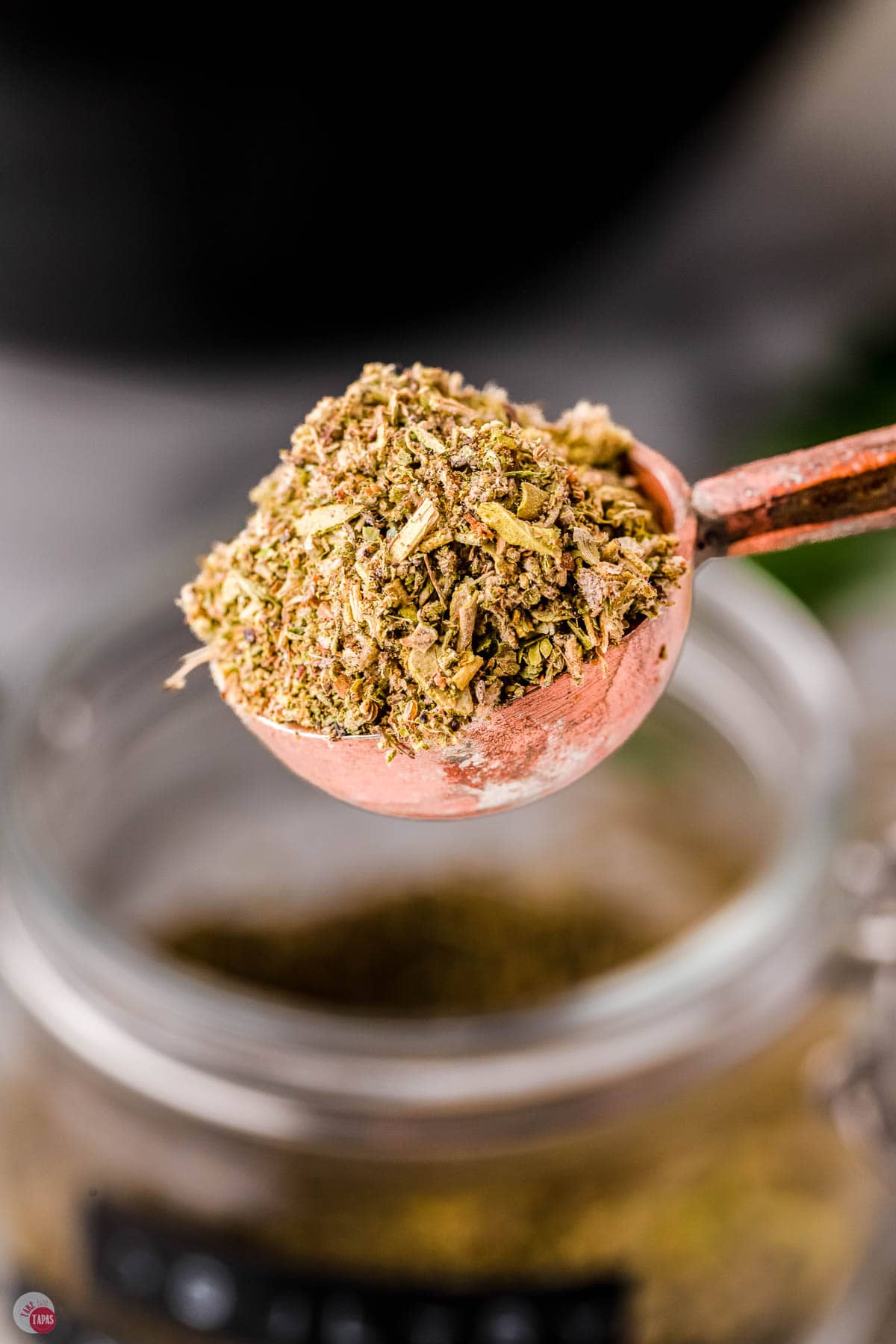
McCormick’s blend uses finely ground herbs and does not include oregano or celery seed. This homemade version uses rubbed sage and rubbed marjoram for better texture and more intense herb flavor, plus oregano and celery seed that add a savory depth and slight earthiness the McCormick version does not have.
Use this as a direct one-for-one substitute in any recipe that calls for McCormick poultry seasoning.
This post may contain affiliate links. As an Amazon Associate, I earn from qualifying purchases at no additional cost to you. Read my disclosure policy.
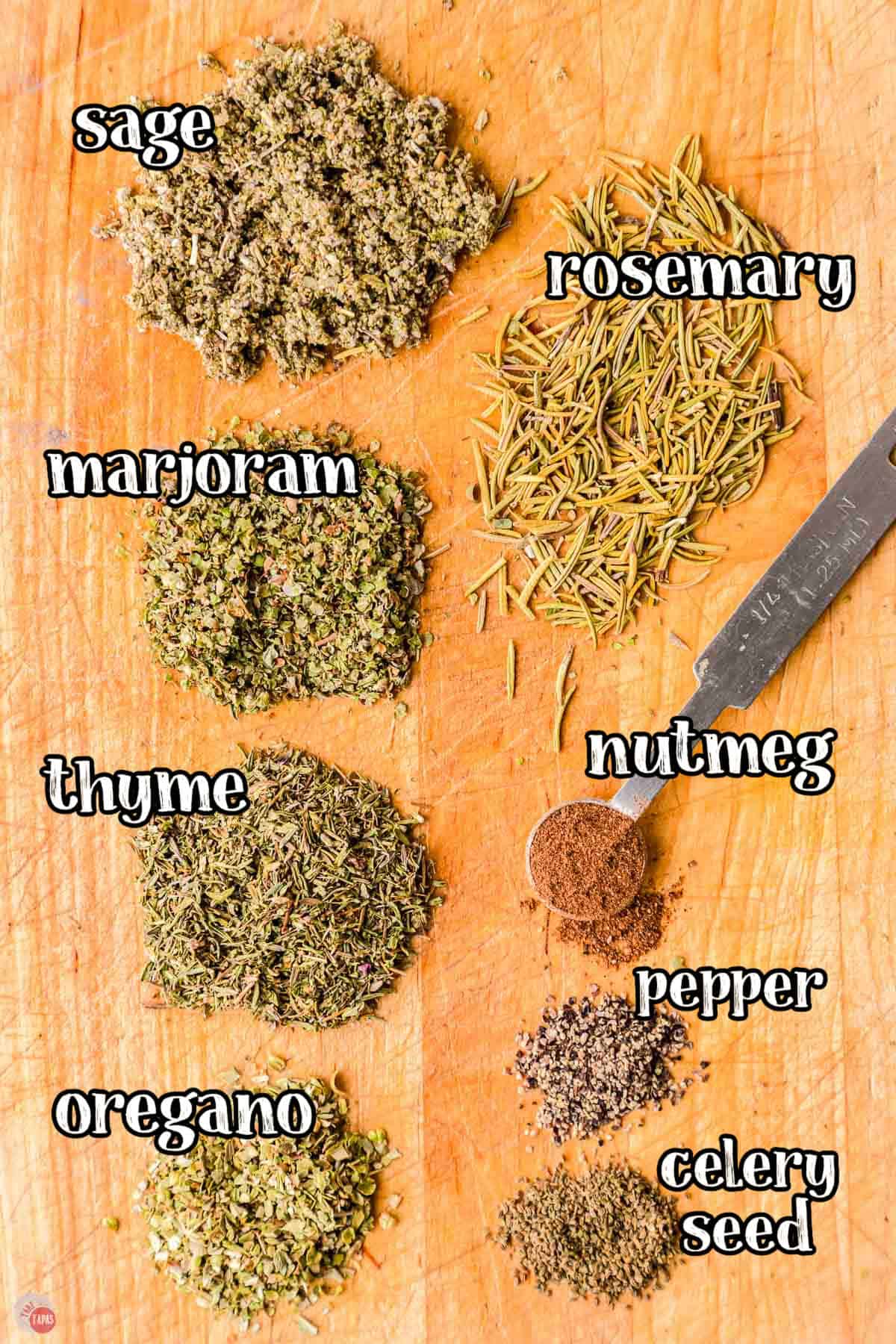
See recipe card for complete information on ingredients and their quantities.
Ingredient Notes
Rubbed sage – The backbone of any poultry seasoning and the herb that makes it taste unmistakably like Thanksgiving! This recipe uses rubbed sage rather than ground for a coarser texture that distributes better through stuffing and holds up when mixed into meat. It has a more intense, earthy flavor than ground sage because the leaf oils are better preserved in the rubbing process.
Rubbed marjoram – Closely related to oregano but sweeter and more delicate. Using rubbed marjoram rather than ground gives the blend more texture and a more pronounced herb flavor. If you cannot find marjoram, add more oregano – the flavor profile shifts slightly but the blend still works.
Thyme – Earthy and slightly floral, thyme is essential to the classic poultry seasoning flavor profile. It works alongside the sage to build the herb base of the blend.
Rosemary – Woodsy and aromatic. A small amount adds depth without overpowering the more delicate herbs. If you are grinding the blend in a spice grinder make sure the rosemary is broken down since the leaves are thin and can stay coarser than the other herbs.
Oregano – One of the two ingredients that sets this blend apart from McCormick. It adds a slightly peppery, herby note that gives the blend more complexity than a straight sage and thyme mix. Use a smaller amount if you feel the blend is starting to taste more like Italian seasoning.
Celery seed – The second ingredient McCormick leaves out and one of the most underrated additions to a poultry seasoning blend. It adds a subtle, savory celery flavor that is classic in stuffing and works beautifully with turkey and chicken. A little goes a long way.
Nutmeg – Just a small amount adds a warm, slightly sweet note that softens the more assertive herbs. It is one of those ingredients you would miss if it were gone even if you could not identify it by name.
Black pepper – Adds a mild background heat that keeps the blend from tasting flat. White pepper works as a substitute if you want a slightly more floral, less sharp heat.
For more insider tips, tricks, and a behind the scenes look, follow me on Pinterest, Facebook, Instagram, & X.
How to Make Homemade Poultry Seasoning
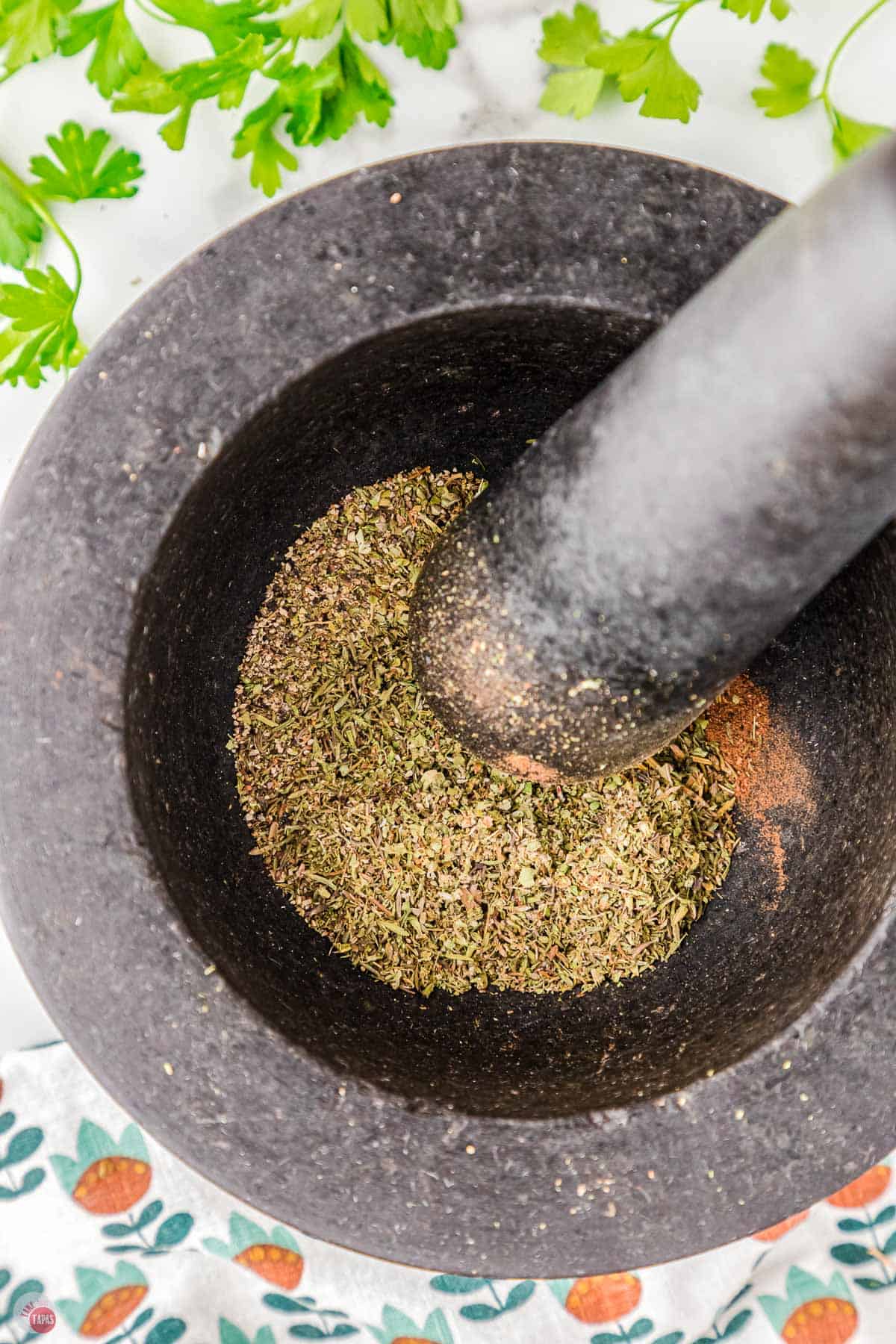
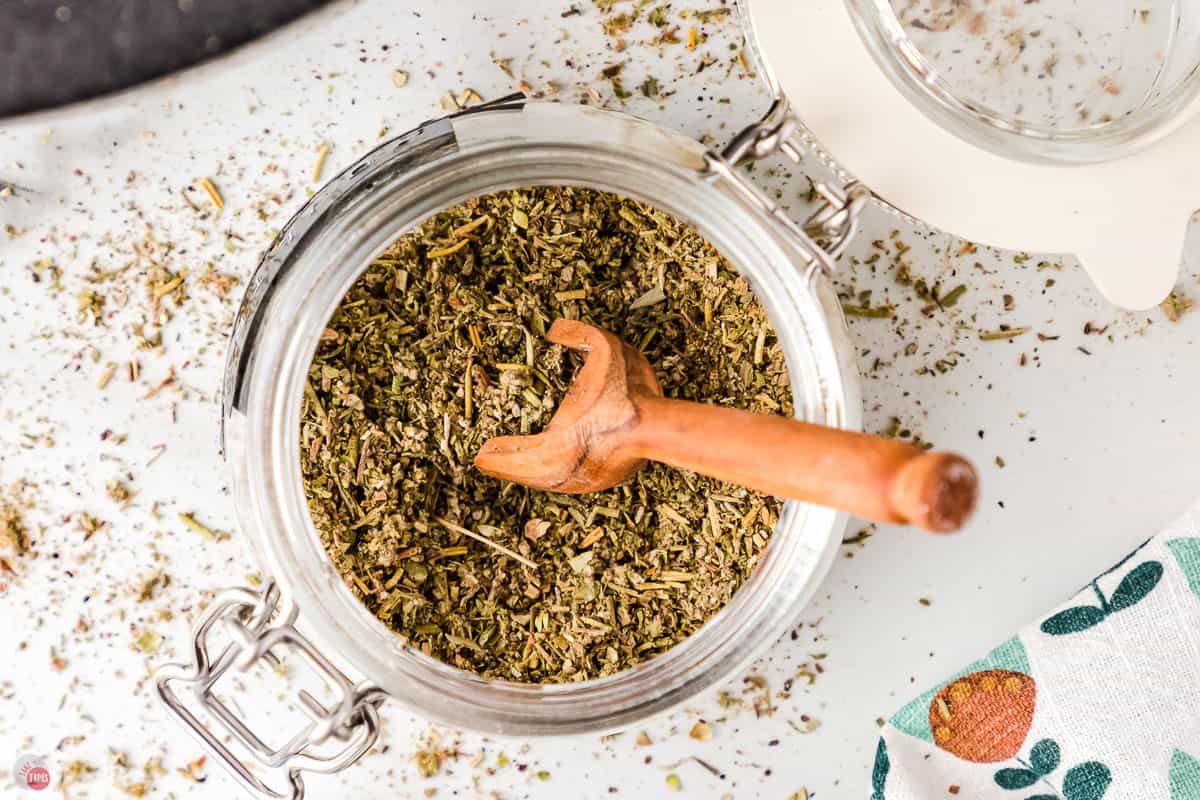
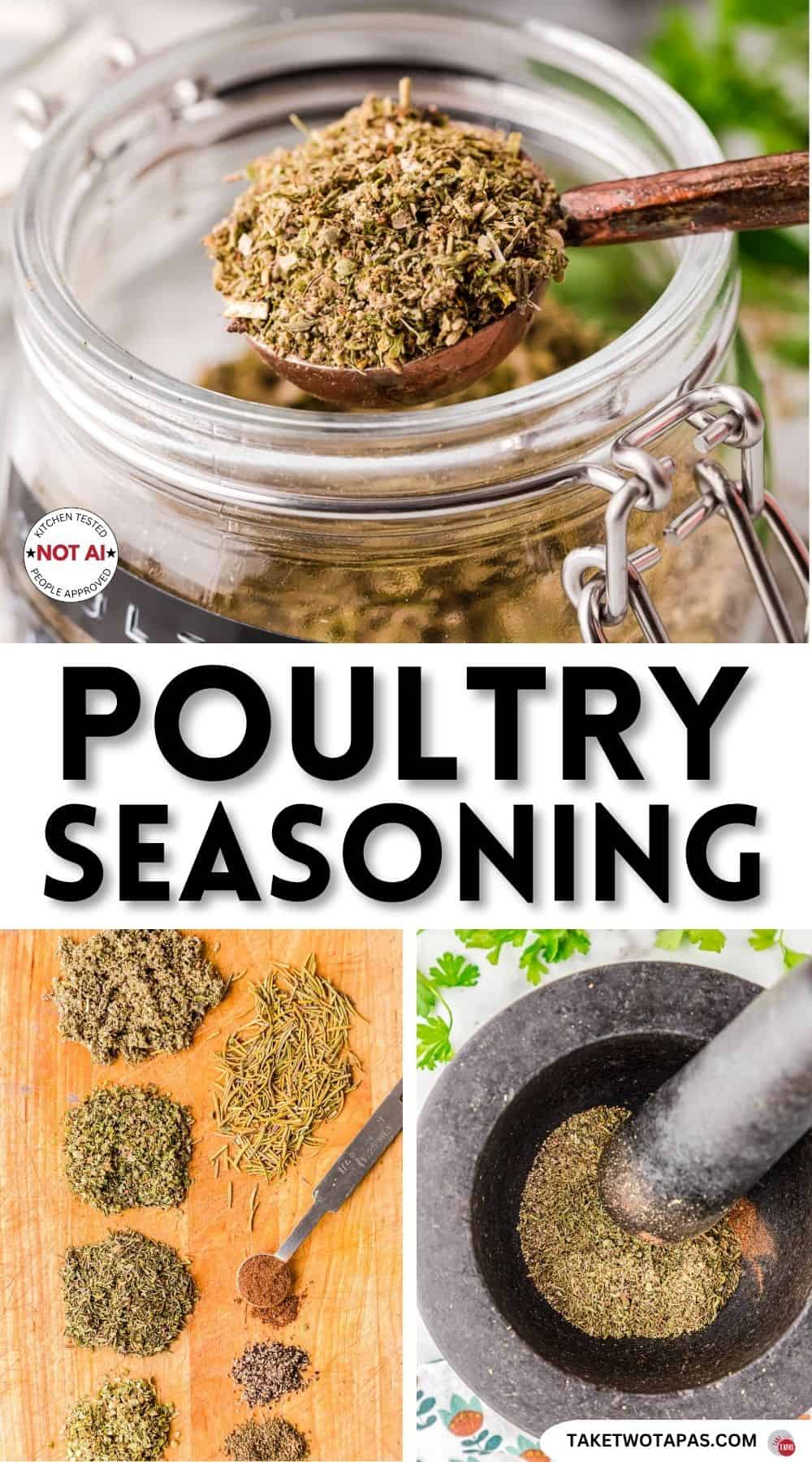
- Combine all ingredients in a small mixing bowl. Whisk or stir to combine thoroughly. For a finer powder, grind in a mortar and pestle or spice grinder until you reach your desired consistency.
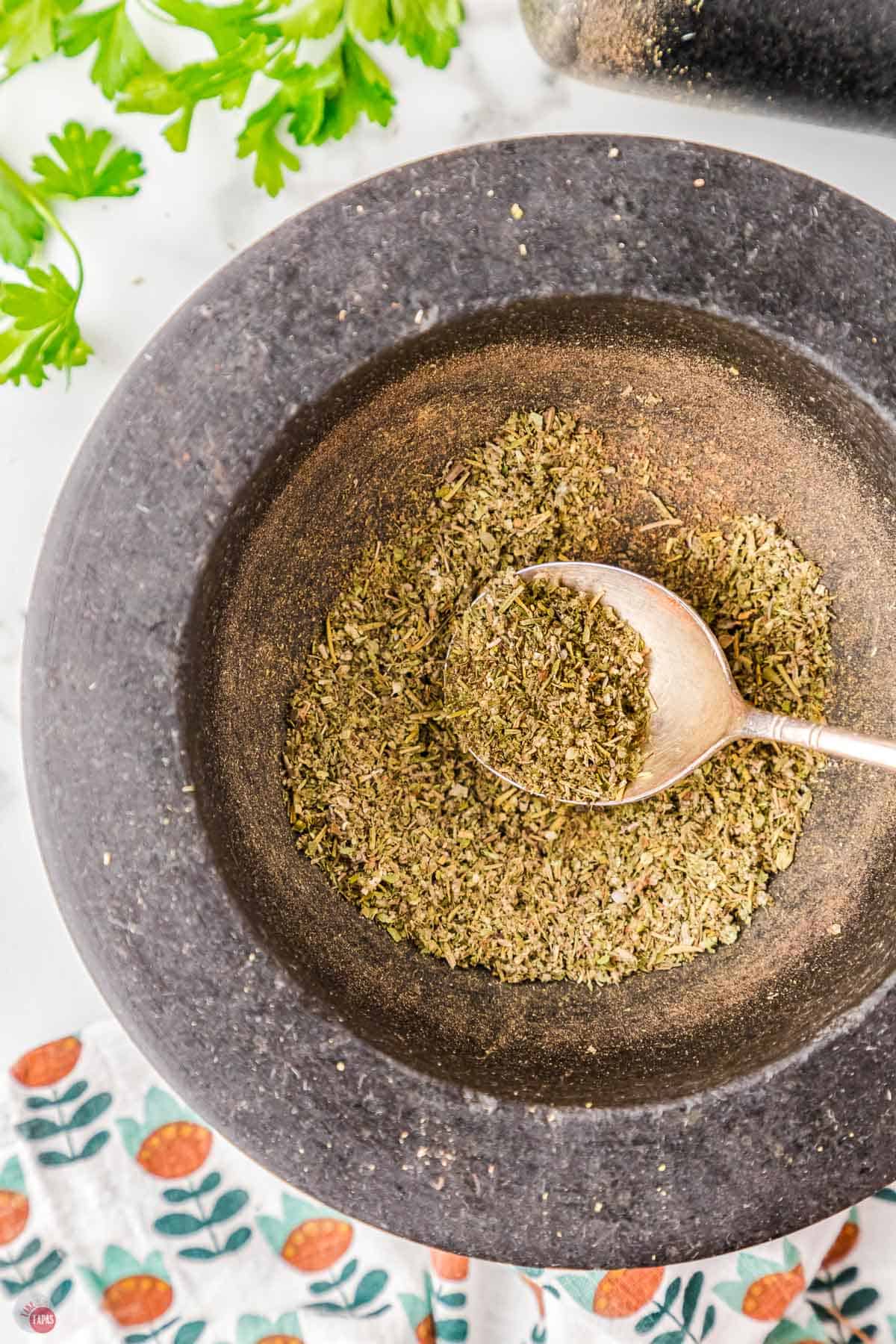
- Transfer to an airtight glass jar or spice container. Label with the date and store in a cool, dark, dry place until ready to use.
For the full recipe and detailed instructions, please refer to the recipe card at the bottom of the post.
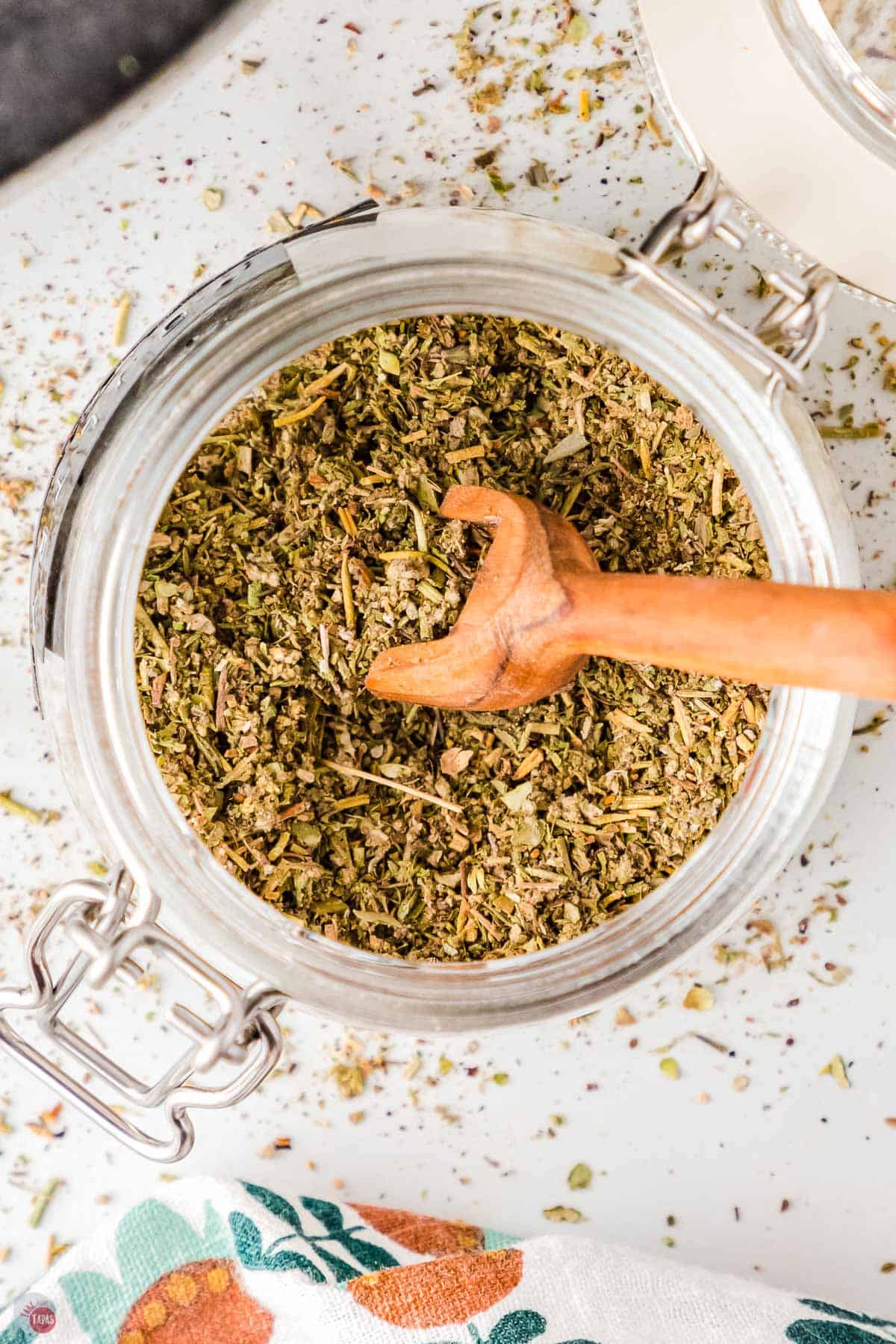
How to Use Poultry Seasoning Recipe
On turkey: Rub generously under and over the skin before roasting, frying, or smoking. Apply at least 30 minutes ahead of time so the herbs have time to penetrate. This is the most classic use and the reason most people keep a jar of this in the cabinet from October through December.
On chicken: Use as a dry rub on whole chicken, chicken thighs, or chicken breasts before roasting or pan searing. It works especially well on herb roasted chicken where the blend can caramelize on the skin.
In stuffing: Stir directly into your stuffing mixture. The rubbed herbs distribute beautifully through bread based stuffings and add the classic savory herb flavor that makes stuffing taste like stuffing.
In soups and casseroles: Add a teaspoon or two to chicken soup, pot pie filling, or any casserole that uses poultry as a protein. It builds depth into anything with a broth base.
On vegetables: Toss root vegetables in olive oil and this blend before roasting. Carrots, parsnips, sweet potatoes, and Brussels sprouts are especially good.
On pork: Works beautifully on pork chops and pork roasts as a dry rub. The sage forward flavor profile is a classic pairing with pork.
Storage
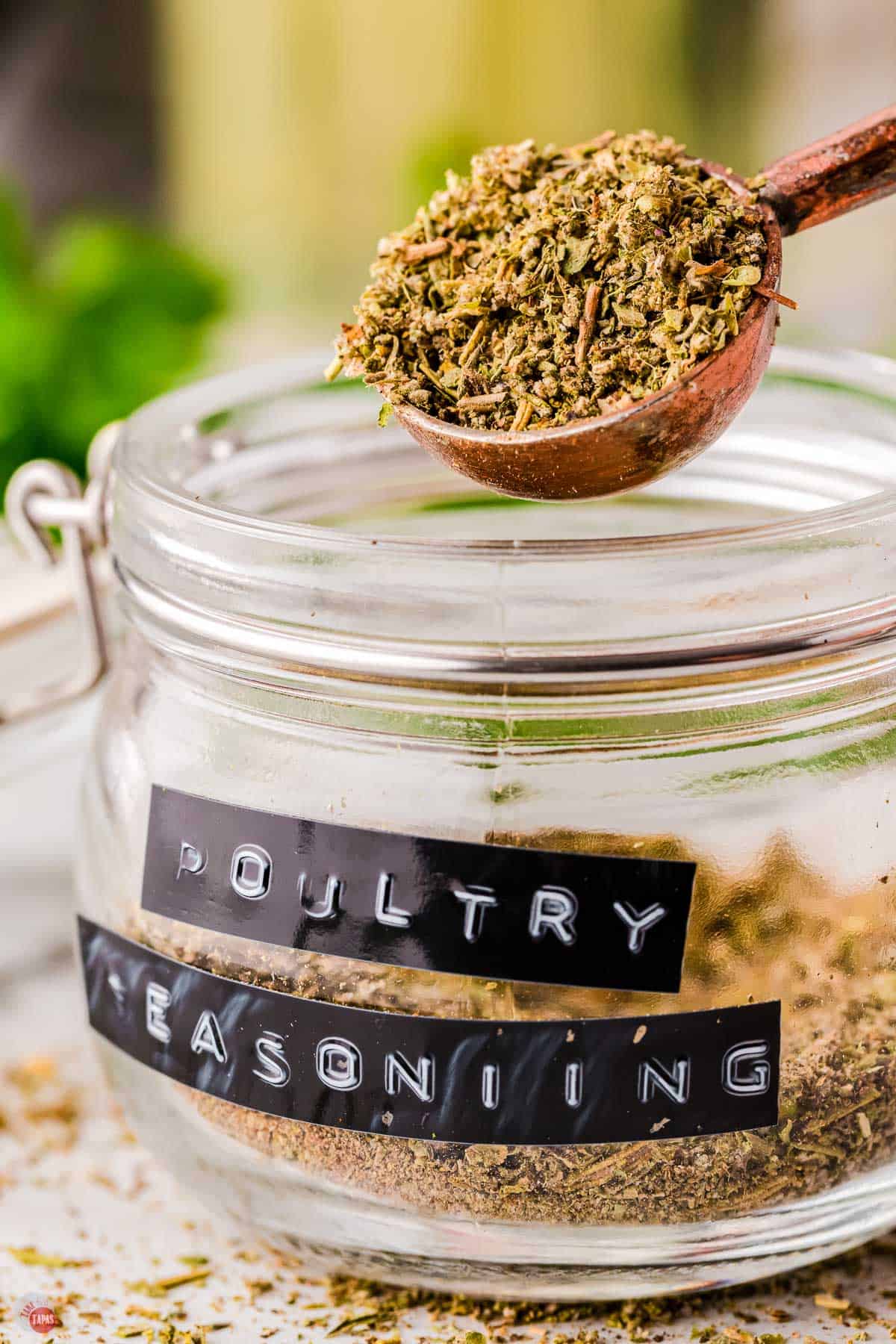
Store your homemade poultry seasoning in an airtight glass jar in a cool, dark, dry place. As long as all your ingredients are fully dry it will keep for several months.
Glass jars work best and keep the herbs fresher longer than plastic containers. If moisture causes the blend to clump do not worry — just use a fork to break it up. It is still good.
Label with the date so you know when to make a fresh batch before the holiday season.
Variations
Add lemon – A teaspoon of dried lemon peel adds a bright citrusy note that works especially well on roasted chicken and turkey breast. It lifts the heavier herbs and makes the whole blend feel more fresh.
Make it spicier – Add a pinch of cayenne pepper for a subtle heat that works especially well on fried turkey. Start with a small amount and adjust to taste.
Add dry mustard – A quarter teaspoon adds a gentle heat and a slightly tangy note that works beautifully with poultry. It is one of those additions that makes people ask what is different about your turkey.
Make it a fine powder – Run the whole blend through a spice grinder until smooth. This works better in gravies and sauces where you want the herb flavor without the texture.
Add garam masala – A small amount of this Indian spice blend stirred into the poultry seasoning adds an earthy, exotic quality that is unexpected and genuinely delicious on roasted chicken.
Poultry Seasoning vs Chicken Seasoning
These are not the same blend even though they are both used on chicken. Poultry seasoning is an herb forward blend built around sage, marjoram, and thyme. It has no garlic, no onion, and no paprika. Just herbs, not spices.
Chicken seasoning is a more general purpose blend that typically includes garlic powder, onion powder, and paprika alongside the herbs. It is more versatile while poultry seasoning is specifically designed for the classic roasted chicken and turkey.
They are not interchangeable in recipes where the herb flavor is the star — stuffing especially.
What Can I Use Instead of Poultry Seasoning?
If you do not have a jar made up or are missing a few ingredients, the simplest substitute is two teaspoons of sage and one teaspoon of thyme or marjoram. That combination covers the most essential flavors in the mix.
Italian seasoning also works as a substitute since it shares rosemary and thyme with poultry seasoning. Add a little extra sage to the Italian seasoning and it gets very close to the real thing. The main thing missing will be the celery seed note which is hard to replicate with a substitute.

Recipes Using This Poultry Seasoning
- Fried Cornbread Stuffing Balls – seasons the panko coating
- Wild Rice Stuffing – swap it in for the sage
- Better Stuffing From a Box – swap it in for the herbs
Frequently Asked Questions
Poultry seasoning is a blend of rubbed sage, marjoram, thyme, rosemary, oregano, celery seed, nutmeg, and black pepper. Sage is the dominant herb and gives the blend its characteristic savory, herbaceous flavor. This homemade version also includes oregano and celery seed which most store-bought blends including McCormick leave out.
For most recipes yes. The main differences are texture and ingredients. This homemade version uses rubbed sage and rubbed marjoram rather than finely ground herbs which gives it a coarser texture that distributes better in stuffing and holds up better on meat. It also includes oregano and celery seed that McCormick does not use, which adds depth and extra layers of flavor to the blend.
Start with one teaspoon per pound as a general guideline and adjust based on your preference. For a dry rub applied under the skin, you can use more generously since the skin acts as a barrier. For stuffing, start with one to two teaspoons per four cups of bread cubes and taste as you go.
Stored in an airtight container in a cool, dark, dry place it will keep for several months. Make a fresh batch at the start of the fall season so you have it ready for Thanksgiving. If the blend starts to clump from moisture just break it up with a fork – it is still good.
Yes, but double the amounts since fresh herbs are significantly less concentrated than dried. Use the blend immediately rather than storing it since fresh herbs do not keep the same way as dried spices.
They share some ingredients, rosemary and thyme appear in bot, but poultry seasoning is based on sage and does not have basil or oregano in most versions. Italian seasoning does not have sage which is the most distinctive flavor in poultry seasoning. You can substitute Italian seasoning with extra sage added in a pinch but they are not the same blend.
Absolutely. It works really well on pork chops and pork roasts, in stuffing and pot pie filling, stirred into soups and casseroles, and roasted vegetables before roasting. The sage forward herb profile pairs well with anything that benefits from a savory, classic herb flavor.
Looking for more ways to flavor your favorite meals? Check out our full collection of Homemade Spice Mixes and Seasoning Blends.

Recipe Tips & Tricks
- Use dried herbs for best results – fresh herbs introduce moisture that shortens the shelf life of the blend significantly.
- Check the expiration dates on your individual spices before mixing – old thyme and rosemary lose their potency fast and will make the whole blend taste flat.
- If using fresh herbs double the amounts and use immediately.
- Rub the blend between your fingers before adding it to a dish to release the oils and activate more flavor.
- Grind the whole blend in a spice grinder if you want a fine powder for gravies and sauces. Or use a mortar and pestle for a medium grind.
- Make a batch in early October so you are not scrambling before Thanksgiving and need a turkey rub.
This homemade poultry seasoning recipe is a herbaceous blend that makes everything from turkey to stuffing taste better than anything that comes out of a store-bought jar. Make a batch before the holidays and you will wonder why you ever settled for McCormick.
If you love this recipe as much as I do, please leave us a ⭐️⭐️⭐️⭐️⭐️ five-star review in the comment section below. Thanks!
Poultry Seasoning
Ingredients
- 2 teaspoons sage
- 1 ½ teaspoons marjoram
- 1 ½ teaspoons thyme
- 1 teaspoon oregano
- 1 ½ teaspoons rosemary
- ¼ teaspoon nutmeg
- ¼ teaspoon pepper
- ¼ teaspoon celery seed
Instructions
- Combine all the ingredients.
- Grind in a mortar and pestle or spice grinder if desired.
- Store in an airtight container until ready to use.
Video
Notes
- Use dried herbs for best results – fresh herbs introduce moisture that shortens the shelf life of the blend significantly.
- Check the expiration dates on your individual spices before mixing – old thyme and rosemary lose their potency fast and will make the whole blend taste flat.
- If using fresh herbs double the amounts and use immediately.
- Rub the blend between your fingers before adding it to a dish to release the oils and activate more flavor.
- Grind the whole blend in a spice grinder if you want a fine powder for gravies and sauces. Or use a mortar and pestle for a medium grind.
- Make a batch in early October so you are not scrambling before Thanksgiving.
Nutrition
©TakeTwoTapas.com. Content and photographs are copyright protected. Sharing of this recipe is both encouraged and appreciated. Copying and/or pasting full recipes to any social media is strictly prohibited.